恂
Character Story & Explanation
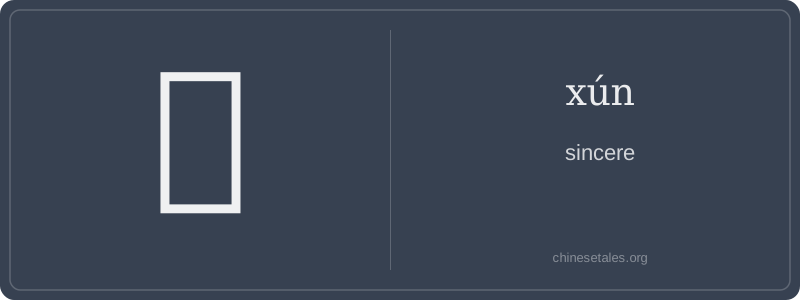
The earliest form of 恂 appears in bronze inscriptions as a combination of 心 (heart) and 旬 — originally a pictograph of a curved enclosure representing a ten-day cycle (used in ancient lunar calendars). In oracle bone script, 旬 looked like a looped rope around a cross — symbolizing completeness and cyclical diligence. Over time, 心 evolved into the left-side 忄 (‘heart-mind’ radical), while 旬 simplified from its complex loop-and-cross shape into today’s clean nine-stroke form: three horizontal lines, a vertical stroke, then a compact ‘勹+日’-like frame.
This visual pairing wasn’t arbitrary: ancient scribes linked sincerity with rhythmic, disciplined practice — like observing a ten-day period of self-cultivation. The Book of Rites (Lǐjì) praises the ‘恂恂如也’ demeanor of virtuous gentlemen — not boastful, but steadily earnest. Later, in Sima Qian’s Records of the Grand Historian, 恂 describes ministers who spoke plainly yet respectfully before the throne. Its quiet power lies in how the character itself embodies what it names: calm strokes, balanced structure, no flourish — sincerity as structural integrity.
At its heart, 恂 (xún) isn’t just 'sincere' — it’s sincerity with quiet gravity: the kind that shows up as respectful stillness, unflinching honesty, and humble attentiveness. Think of a junior scholar bowing slightly while listening to a master — not fidgeting, not interrupting, but fully present and earnest. This isn’t casual friendliness; it’s moral composure rooted in classical virtue.
Grammatically, 恂 is almost never used alone in modern speech. You’ll find it only in literary or formal compounds like 恂恂 (xún xún) — an adverb meaning 'earnestly, respectfully' — often modifying verbs like 请教 (to humbly ask for advice) or 受教 (to receive instruction). Learners mistakenly try to use it like 真诚 (zhēnchéng), but 恂 carries no colloquial warmth — drop it into casual chat and you’ll sound like a Song-dynasty official addressing the emperor.
Culturally, 恂 echoes Confucian ideals of inner authenticity manifesting as outer decorum — sincerity *as restraint*, not emotional outpouring. A common mistake? Confusing it with 心 (xīn, 'heart') or 循 (xún, 'to follow'), both visually similar. Remember: 恂 has no 'walking' radical (辶) and no standalone 'heart' — it’s 忄 (heart-radical) + 旬 (xún, 'ten-day period'), evoking measured, disciplined sincerity — like keeping a ten-day vow of truthful conduct.