彤
Character Story & Explanation
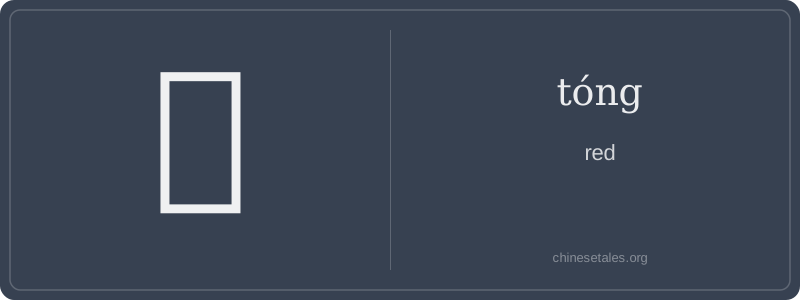
The earliest form of 彤 appears in bronze inscriptions of the Western Zhou dynasty (c. 1046–771 BCE) as a combination of 丹 (dān, 'cinnabar; vermillion mineral') on the left and 彡 (shān, 'ornamental strokes; decorative lines') on the right. The 丹 component originally depicted a furnace with cinnabar ore inside — a vivid pictograph of the most prized red pigment in ancient China. Over centuries, the furnace shape simplified into the modern 丹, while the three flowing strokes of 彡 evolved from stylized brushstrokes or painted patterns applied to ritual objects — visual proof that this red wasn’t just color, but *adornment with meaning*.
This dual origin forged 彤’s essence: red as both substance (cinnabar pigment) and symbolism (ritual embellishment). In the Book of Documents, '彤弓' (tóng gōng) refers to the emperor’s crimson-dyed bow — not merely painted red, but consecrated through lacquer and ceremony. The character’s enduring presence in names and poetry reflects how deeply color was woven into moral and cosmic order: 彤 red was never arbitrary — it signaled heaven’s favor, ancestral reverence, or sovereign mandate. Even today, its seven strokes retain that ancient duality: mineral weight + artistic grace.
Think of 彤 (tóng) as Chinese ‘crimson’ — not just any red, but the deep, luminous red of lacquered palace gates in imperial Beijing or the vermilion ink used by emperors to approve edicts. Unlike common red words like 红 (hóng) — which is everyday, neutral, and versatile — 彤 carries poetic weight and historical shimmer: it’s the red of ritual, prestige, and literary elegance. You’ll almost never hear it in casual speech ('My shirt is 彤' would sound absurdly archaic), but you’ll see it in classical poetry, formal names, and compound words that evoke grandeur or solemn beauty.
Grammatically, 彤 functions exclusively as an attributive adjective — it *must* come before a noun and cannot stand alone or follow verbs like 是. So you say 彤云 (tóng yún, 'crimson clouds'), not *云是彤. It also never takes degree adverbs like 很 or 非常 — no *很彤, ever. Instead, its intensity is baked into the character itself, like saying 'vermilion' instead of 'very red' in English. Learners often misapply it like 红, inserting it where modern usage demands 红 or 朱 — a subtle but jarring error, like calling a stop sign 'scarlet' in a traffic manual.
Culturally, 彤 is a time capsule: it appears over 30 times in the Classic of Poetry (Shījīng), describing ceremonial banners, chariots, and sacrificial vessels — always signaling sacredness or authority. Today, it survives most vibrantly in personal names (e.g., 彤云 Tóngyún, 'Crimson Cloud') and literary compounds. Mistake it for a general-purpose red word, and you’ll sound like someone quoting Shakespeare at a coffee shop — technically correct, but tonally off-key.